

Arcelor Mittal NY Registry Shares NEW stocks have been trading up by 7.64 percent amid strong steel demand and earnings optimism
Market Insights For MT Traders
- Completed the first tranche of a 2025–2030 buyback, repurchasing 10 million shares around €49.32, and immediately moved into a second tranche for up to another 10 million shares.
- Multi‑year buyback framework through 2030 ties future repurchases to free cash flow, shareholder approval, and market conditions, setting a long runway for ongoing capital returns.
- Entered a strategic collaboration with Amazon Web Services to roll out cloud, AI, and edge tools across global steel operations, targeting efficiency, safety, and predictive maintenance.
- Amazon agreed to a multi‑year framework to source lower‑carbon XCarb steel for European and UK facilities and data centres, supporting demand for ArcelorMittal’s low‑carbon products.
- Published its 2025 Payments to Governments report, adding transparency around mining‑related taxes and confirming the scale of its integrated steel and mining platform.

Weekly Update Jun 29 – Jul 03, 2026: On Saturday, July 04, 2026 Arcelor Mittal NY Registry Shares NEW stock [NYSE: MT] is trending up by 7.64%! Discover the key drivers behind this movement as well as our expert analysis in the detailed breakdown below.
Materials industry expert:
Analyst sentiment – positive
ArcelorMittal (MT) remains a globally scaled, cycle‑sensitive steel leader with solid but not exceptional returns. Revenue of ~$61.4bn and pre‑tax margin near 21% translate into mid‑single‑digit ROA (5.3%) and ROE of 9.3%, reasonable for a capital‑intensive steelmaker. Valuation is undemanding: P/E 13.1x and 0.68x sales, with shares at ~0.76x book (BVPS ~$70.9), implying the market discounts cyclical risk despite a modest 0.9–1.0% dividend yield and a conservative 0.18 long‑term debt‑to‑capital.
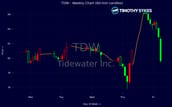
Weekly prices show sharp upward momentum, with a jump from ~59 to ~63.8 and strong closes near highs, indicating aggressive buying and likely short covering. Intraday 5‑minute candles (not shown numerically but implied by range extension) suggest rising volume on up‑moves and shallow pullbacks, confirming a short‑term uptrend. Key trading level is ~60.00–60.50, now strong support; pullbacks into that zone are buyable with a tight stop below 59.00, targeting a retest and extension above 64.00.
Near‑term catalysts are clearly positive: the multi‑tranche buyback through 2030 (first 10m shares at ~€49.32 completed, second tranche underway) tightens free float and supports EPS, while the AWS partnership directly addresses cost efficiency, reliability, and low‑carbon positioning, enhancing MT’s premium versus generic steel peers. Versus global materials and steel benchmarks, the stock’s low multiples and improving tech/green profile justify a constructive stance. Base case: upside toward mid‑€60s, with support ~€50 and resistance ~€65.
More Breaking News
Quick Financial Overview
Arcelor Mittal NY Registry Shares NEW (MT) is trading in a strong short‑term upswing. The recent weekly candles show price lifting from the high‑50s into the low‑60s, with a push toward €63–€64. The latest intraday 5‑minute snapshot, opening near €62.17 and closing around €63.40 after tagging €63.66, signals active buying on strength rather than just a gap and fade. That is the kind of intraday character momentum traders want to see when a fundamental catalyst hits.
On the fundamentals, ArcelorMittal reported revenue of about $61.35B and trades at a price‑to‑sales ratio near 0.68, which is low for a global industrial name. A price/earnings near 13.1 and price‑to‑book around 0.76 suggest the market still assigns a discount to book value despite a pretax profit margin above 20%. Returns on assets of 5.3% and return on equity of 9.33% show a solid, not explosive, profitability profile for a cyclical steel producer.
The balance sheet is sizable, with total assets close to $97.70B and equity around $54.47B, giving a leverage ratio of 1.8 and long‑term debt of roughly $10.67B. Working capital of about $8.09B and inventory near $18.59B underline the scale of operations and storage needs across steel and mining. A modest dividend yield just under 1% and a $0.60 annual dividend rate mean most of the equity story for MT traders is now about buybacks and price gains, not yield. The ex‑dividend date on 2026/08/07 is a timing point short‑term swing traders should note.
Conclusion
ArcelorMittal: Buybacks, AWS Deal, And Trading Lessons
For traders, the key story in ArcelorMittal and MT right now is the alignment of strong technical momentum with visible capital‑return and growth catalysts. A 10 million‑share buyback tranche, immediately followed by a second potential 10 million‑share tranche, sends a clear message: management sees value at current levels and is willing to shrink the float through 2030 when cash allows. Even if some shares support employee plans, the net direction is still toward a tighter share count over time.
At the same time, the AWS partnership and Amazon’s multi‑year XCarb steel framework give Arcelor Mittal NY Registry Shares NEW a different edge from a typical steel name. The deal pushes operations deeper into AI‑driven optimization while locking in demand for low‑carbon steel into critical data‑centre and facility build‑outs. On the chart, the firm push from the high‑50s into the low‑60s, plus intraday strength toward €63–€64, shows traders are already leaning into this narrative. As millionaire penny stock trader and teacher Tim Sykes, says, “Small gains add up over time; focus on building wealth gradually, not chasing jackpots.”. That mindset applies here too: traders who respect the trend and manage risk carefully can use the evolving story around buybacks and AI‑enabled efficiency as a series of potential trading edges rather than a single all‑or‑nothing bet.
For MT, the risk side is the usual steel‑cycle and macro slowdown exposure, along with the need to keep free cash flow strong enough to fund that multi‑year buyback path. But when a stock trades below book value, delivers positive returns, and layers on disciplined repurchases plus a blue‑chip technology and offtake partner, the setup deserves a place on traders’ watchlists. As I tell my students, “You do not need to predict the future; you just need to recognize when price, volume, and catalysts are finally pointing in the same direction.””,”scores”:{“risk-level”:”medium”},”trade”:”true
This is stock news, not investment advice. Timothy Sykes News delivers real-time stock market news focused on key catalysts driving short-term price movements. Our content is tailored for active traders and investors seeking to capitalize on rapid price fluctuations, particularly in volatile sectors like penny stocks. Readers come to us for detailed coverage on earnings reports, mergers, FDA approvals, new contracts, and unusual trading volumes that can trigger significant short-term price action. Some users utilize our news to explain sudden stock movements, while others rely on it for diligent research into potential investment opportunities.
Dive deeper into the world of trading with Timothy Sykes, renowned for his expertise in penny stocks. Explore his top picks and discover the strategies that have propelled him to success with these articles:
- Penny Stocks Trading Guide
- Best Penny Stocks Under $1 to Buy Today
- Top 8 Penny Stocks to Watch on Robinhood
Once you’ve got some stocks on watch, elevate your trading game with StocksToTrade the ultimate platform for traders. With specialized tools for swing and day trading, StocksToTrade will guide you through the market’s twists and turns.
Dig into StocksToTrade’s watchlists here:




Leave a reply