


I don’t think you “get it” (yet)…
Now is the best time in history to be a trader.
Collective knowledge, education, and technology have combined into a world where anyone can design their own financial future.
No degree necessary, no geographic limitations.
Twenty-five years ago, trading stocks meant either getting a Series 7 license or calling a stockbroker to execute every single trade at massive commissions. The barriers were enormous, the costs were prohibitive, and access was restricted to Wall Street insiders.
These days, you’re trading in a completely different universe…
You can learn to trade from your phone while sitting in your living room. You have access to the same charts, data, and tools that billion-dollar hedge funds use. You can execute trades in milliseconds for zero commissions.
You have no excuses.
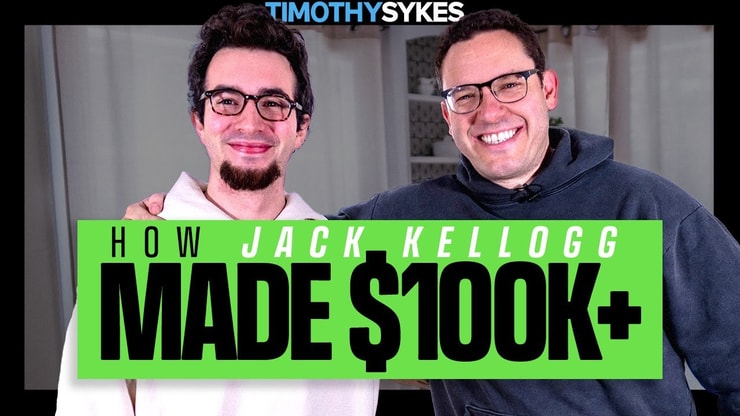
My millionaire student, Jack Kellogg, started as a valet, parking cars.
He used the same tools and platforms available to you, in between pulling Volvos up to soccer moms…

As of today, he’s made over $24 million in verified lifetime profits.*
He didn’t have expensive tools or insider connections. He just understood what was available (and dedicated his life to studying)…
If you’re not taking advantage of this moment in history, you’re wasting an opportunity that traders from previous generations could only dream about…
This is how YOU can take advantage of the biggest opportunity in trading history…
Table of Contents
1. Online Brokerage Platforms Changed Everything
It’s easy to take mobile brokerage platforms for granted. You’ve probably never used anything else.
But I remember what it was like before online trading existed.
If you wanted to trade pre-2000, you had two options: get a Series 7 license and trade in person, or execute your trades through a licensed stockbroker (who charged you massive commissions on every transaction).
This created a barrier to entry that kept everyday people completely locked out of the markets. Trading was reserved for seasoned professionals and the wealthy.
Then the personal computer arrived, the internet followed, and suddenly a revolution happened.
Non-licensed traders could finally speculate. All they had to do was open a brokerage account, and with a few clicks, they were trading.
Like me.
Throwback to one of the most beautiful places in the world and your daily reminder to stay positive/grateful as there are so many negative and toxic people who always try to bring you down to their lowly level — DO NOT LET THEM!
Never forget we live in the most fascinating time… pic.twitter.com/R9ouUzVCZB
— Timothy Sykes (@timothysykes) February 7, 2026
I started trading in high school with $12,000 of my Bar Mitzvah money.
By the time I graduated from college, I’d grown that initial stake to over $2 million.*
But I never would’ve achieved what I have in the stock market without online trading.
The opportunity simply wouldn’t have existed for a teenager with no connections, no Series 7 license, and no way to get to Wall Street.
2. Access To Information Has Leveled The Playing Field
Online trading didn’t just allow retail traders to execute trades. It also opened the floodgates of market information.
For the first time in history, millions of retail traders have access to the same data as professionals.
Imagine doing market research before the internet…
You’d go to the library and read outdated financial newspapers for hours, just hoping to find relevant information buried in annual reports. Morning newspapers and nightly financial news (hours out of date) were the only sources for market-moving headlines.
You had no access to real-time data, no ability to track price action, no way to see what was happening in the market unless you were physically on the trading floor (or paying thousands of dollars a month for specialized terminals).
You were fundamentally disadvantaged against Wall Street.
Today, you can see every single piece of public information about a company with a few keystrokes.
SEC filings, news catalysts, short interest, float data, insider transactions. It’s all there, instantly, for free.
Wall Street doesn’t have a monopoly on data anymore.
You have the same access they do.
More Breaking News
- Ford Recalls & BlueCruise Limitations Impact Brand Perception
- AST SpaceMobile Surges on TELUS Partnership for Space-Based Broadband
- Archer Aviation Faces Cash Burn Amid eVTOL Development
- Tidewater’s Strategic Moves: Expansion and Financial Growth
Are you willing to study it?
3. Technical Analysis Tools Your Dad Could Only Dream Of
Up until the 21st century, charts were drawn on chalkboards.
Professional traders would draw price action by hand, print charts on overhead projectors, or pay thousands of dollars per month for specialty charting services.
Even during the trading heyday of the 1980s, professional brokers relied purely on price quotes. Computers didn’t have the graphical capability to display a simple candlestick chart.

And prices were quoted in fractions (like $21 ¼) since computers couldn’t handle decimals yet.
You have access to technical analysis tools that the best traders of the past couldn’t even imagine … for free.
One click brings up any chart, on any stock, with any indicator, in any timeframe.
Yet most traders completely take it for granted.
4. Education Is Everywhere (If You’re Willing To Learn)
When I started trading in the late 1990s, there was no one teaching penny stock strategies.
No YouTube videos, online courses, or chat rooms full of traders sharing ideas in real time.
I had to figure everything out through trial and error.
You don’t.
In 2026, education is everywhere.
You can watch millions of YouTube videos breaking down specific trading patterns…


You can join communities of like-minded traders from all around the world.
It’s all right there, at your fingertips…
Because what you don’t want to hear is the most important part…
The Opportunity Alone Isn’t Enough. You Still Need A #NoDaysOff Approach.
Access to tools and information doesn’t mean automatic success.
It means you have no excuses left.
You can’t blame the system for keeping you out. The barriers are gone.
You can’t blame a lack of information. It’s all instantly available.
You can’t blame expensive tools. Everything you need is cheap (or free).
The only thing standing between you and the life you want is your willingness to study, learn from your mistakes, cut losses quickly, ignore promoters, and take gains into strength.
My millionaire students all started with small accounts (using the same tools you do).
They all took losses in the beginning (just like you have).
But they studied when everyone else was watching TV, built their watchlists when everyone else was sleeping in, and treated trading like a craft to be respected (not a lotto ticket).
Do you have what it takes?
It’s time to find out…

The opportunity is staring you straight in the face.
It’s bigger than it’s ever been in human history.
What are you going to do with it?
Cheers,
Tim Sykes

Leave a reply