timothy sykes logo

Tale of an After-Hours Pump and Dump

Timothy SykesAvatar
Written by Timothy Sykes
Updated 10/23/2026 6 min read

It’s stooooopid.

How can THIS still happen in 2026?

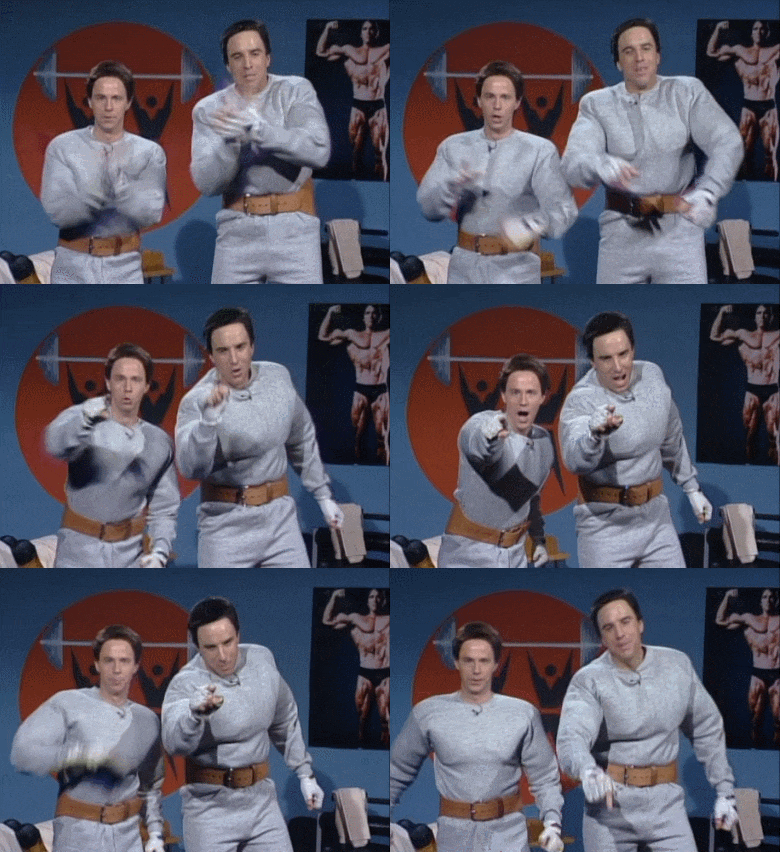
It reminds me of this old skit from SNL…
For as long as I can remember, there have always been pump and dumps.

The pump might start in a different way than the old email promotions or boiler room calls.

But the story (and the end result) is the same.

And it rarely ends well for everyday traders.

Last Thursday (Oct. 22) we saw a classic example when Davion Healthcare Plc (NASDAQ: DAVI) made the entire move in 20 minutes.

Check it out…

Anatomy of an After-Hours Pump and Dump

So, how does something like this…

DAVI 10/22/26, 1-min candles, after-hours pump and dump

… still happen in 2026?

The first thing to understand is that DAVI was a direct listing.

That’s when a company doesn’t go through a traditional IPO process.

Instead of using investment banks or intermediaries, the shareholders sell existing shares directly into the market.

Why would a company do that? Three words…

No Lockup Period

Post image

Get my after-hours watchlist, free

The Night Tape, every trading day after the closing bell, plus The Second Session guide.

In other words, anyone who owns shares is free to sell into the open market on the day it lists.

Crazy, right?

The company announced the date it would list in this press release on Tuesday (Oct. 20):
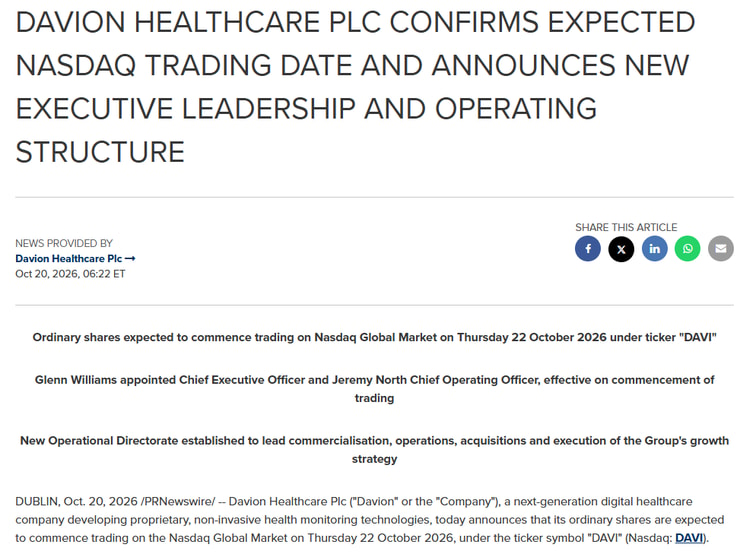
Source: PR Newswire
Source: PR Newswire

So, what happened with DAVI?

First, it traded hardly any shares during regular hours.

Nobody even knew about it, right? There was no “IPO road show” and it wasn’t a big story on financial news stations.

Then, after-hours trading started. It was a classic case of…

Free Chat Rooms Running Wild

Free chat rooms are SO shady. These guys buy right before they pump the stock to their followers.

In other words, they front-run the naive people in their chat room.

Why would they wait until after-hours trading to do the pump?

For the same reason that after-hours trading has become my favorite time to trade…

No Volatility Halts

The pumpers know that if the stock spiked like that during regular hours, it would get halted (FAST).

So, they wait for after-hours to start the pump. And they keep pumping as shareholders sell into the spike.

And DAVI was a doozy…

DAVI 10/22/26, after-hours only, 573% spike in 11 minutes

The crazy thing is, DAVI only traded ~558k shares that day.

So, it wasn’t a big volume move. The float is ~13.5M shares. Even assuming every share bought and sold during the pump and dump was unique, it would’ve been a very small part of the float.

It’s WAY more likely that whoever was buying shares throughout the day orchestrated the pump and sold into strength all the way up.

Yes, it’s disgusting. But it won’t be the last time it happens, so learn from it.

Millionaire Moves

One of the most consistent setups over my 28 years of trading is the weekend strategy.

While everyone else checks out on a Friday afternoon, I start looking for stocks that are up big and holding into the close.

It can’t just be anything, though. I want to see a positive news catalyst and strong volume.

On Friday (Oct. 23) Nautilus Biotechnology Inc. (NASDAQ: NAUT) checked pretty much every box.

NAUT 10/23/26, 1-min candles, classic weekend strategy setup

NAUT has been uptrending all month. The company reports earnings tomorrow and is getting hyped on a popular podcast.

Friday’s move was also a multi-month breakout.

NAUT 6-month, daily candles, multi-month breakout

I took a trade on this one on Friday going into the close. Tomorrow, I’ll let you know how it worked.

If you are interested in learning this strategy, I’ve put together a short video explaining everything.

Check it out below…

Make this trade on a Friday afternoon (you’ll thank me Monday morning).

Catalyst Watch

I’m paying attention to four things right now.

  1. The market is due for a big correction (or even a crash).
  2. The Middle East conflict is still wreaking havoc on oil prices. I’m sure you feel the knock-on effect at the pumps.
  3. The upcoming midterm elections. The market hates uncertainty, right?
  4. Wednesday’s FOMC meeting, where the Fed decides what to do about interest rates.

In other words, it’s a busy time for big picture catalysts

Key Takeaway

Pump and dumps are alive and… still scammy as ever.

It’s part of the game that every trader should understand, if for no other reason than to see just how gullible so many people out there are.

Your job as a trader is to learn how to take advantage of the opportunities.

Remember, almost all of these companies are terrible, terrible businesses.

But they’ll continue to get pumped by shady chat rooms.

Study up, because this isn’t the last pump and dump you’ll ever see.

Cheers,

– Tim Sykes


How much has this post helped you?


Leave a reply

Author card Timothy Sykes picture

Timothy Sykes

Tim Sykes is a penny stock trader and teacher who became a self-made millionaire by the age of 22 by trading $12,415 of bar mitzvah money. After becoming disenchanted with the hedge fund world, he established the Tim Sykes Trading Challenge to teach aspiring traders how to follow his trading strategies. He’s been featured in a variety of media outlets including CNN, Larry King, Steve Harvey, Forbes, Men’s Journal, and more. He’s also an active philanthropist and environmental activist, a co-founder of Karmagawa, and has donated millions of dollars to charity.
Read More

* Results are not typical and will vary from person to person. Making money trading stocks takes time, dedication, and hard work. There are inherent risks involved with investing in the stock market, including the loss of your investment. Past performance in the market is not indicative of future results. Any investment is at your own risk. See Terms of Service here

The available research on day trading suggests that most active traders lose money. Fees and overtrading are major contributors to these losses.

A 2000 study called “Trading is Hazardous to Your Wealth: The Common Stock Investment Performance of Individual Investors” evaluated 66,465 U.S. households that held stocks from 1991 to 1996. The households that traded most averaged an 11.4% annual return during a period where the overall market gained 17.9%. These lower returns were attributed to overconfidence.

A 2014 paper (revised 2019) titled “Learning Fast or Slow?” analyzed the complete transaction history of the Taiwan Stock Exchange between 1992 and 2006. It looked at the ongoing performance of day traders in this sample, and found that 97% of day traders can expect to lose money from trading, and more than 90% of all day trading volume can be traced to investors who predictably lose money. Additionally, it tied the behavior of gamblers and drivers who get more speeding tickets to overtrading, and cited studies showing that legalized gambling has an inverse effect on trading volume.

A 2019 research study (revised 2020) called “Day Trading for a Living?” observed 19,646 Brazilian futures contract traders who started day trading from 2013 to 2015, and recorded two years of their trading activity. The study authors found that 97% of traders with more than 300 days actively trading lost money, and only 1.1% earned more than the Brazilian minimum wage ($16 USD per day). They hypothesized that the greater returns shown in previous studies did not differentiate between frequent day traders and those who traded rarely, and that more frequent trading activity decreases the chance of profitability.

These studies show the wide variance of the available data on day trading profitability. One thing that seems clear from the research is that most day traders lose money .

Millionaire Media 66 W Flagler St. Ste. 900 Miami, FL 33130 United States (888) 878-3621 This is for information purposes only as Millionaire Media LLC nor Timothy Sykes is registered as a securities broker-dealer or an investment adviser. No information herein is intended as securities brokerage, investment, tax, accounting or legal advice, as an offer or solicitation of an offer to sell or buy, or as an endorsement, recommendation or sponsorship of any company, security or fund. Millionaire Media LLC and Timothy Sykes cannot and does not assess, verify or guarantee the adequacy, accuracy or completeness of any information, the suitability or profitability of any particular investment, or the potential value of any investment or informational source. The reader bears responsibility for his/her own investment research and decisions, should seek the advice of a qualified securities professional before making any investment, and investigate and fully understand any and all risks before investing. Millionaire Media LLC and Timothy Sykes in no way warrants the solvency, financial condition, or investment advisability of any of the securities mentioned in communications or websites. In addition, Millionaire Media LLC and Timothy Sykes accepts no liability whatsoever for any direct or consequential loss arising from any use of this information. This information is not intended to be used as the sole basis of any investment decision, nor should it be construed as advice designed to meet the investment needs of any particular investor. Past performance is not necessarily indicative of future returns.

Citations for Disclaimer

Barber, Brad M. and Odean, Terrance, Trading is Hazardous to Your Wealth: The Common Stock Investment Performance of Individual Investors. Available at SSRN: “Day Trading for a Living?”

Barber, Brad M. and Lee, Yi-Tsung and Liu, Yu-Jane and Odean, Terrance and Zhang, Ke, Learning Fast or Slow? (May 28, 2019). Forthcoming: Review of Asset Pricing Studies, Available at SSRN: “https://ssrn.com/abstract=2535636”

Chague, Fernando and De-Losso, Rodrigo and Giovannetti, Bruno, Day Trading for a Living? (June 11, 2020). Available at SSRN: “https://ssrn.com/abstract=3423101”